The Unfinished Page: A Quiet Case for Not Closing the Book
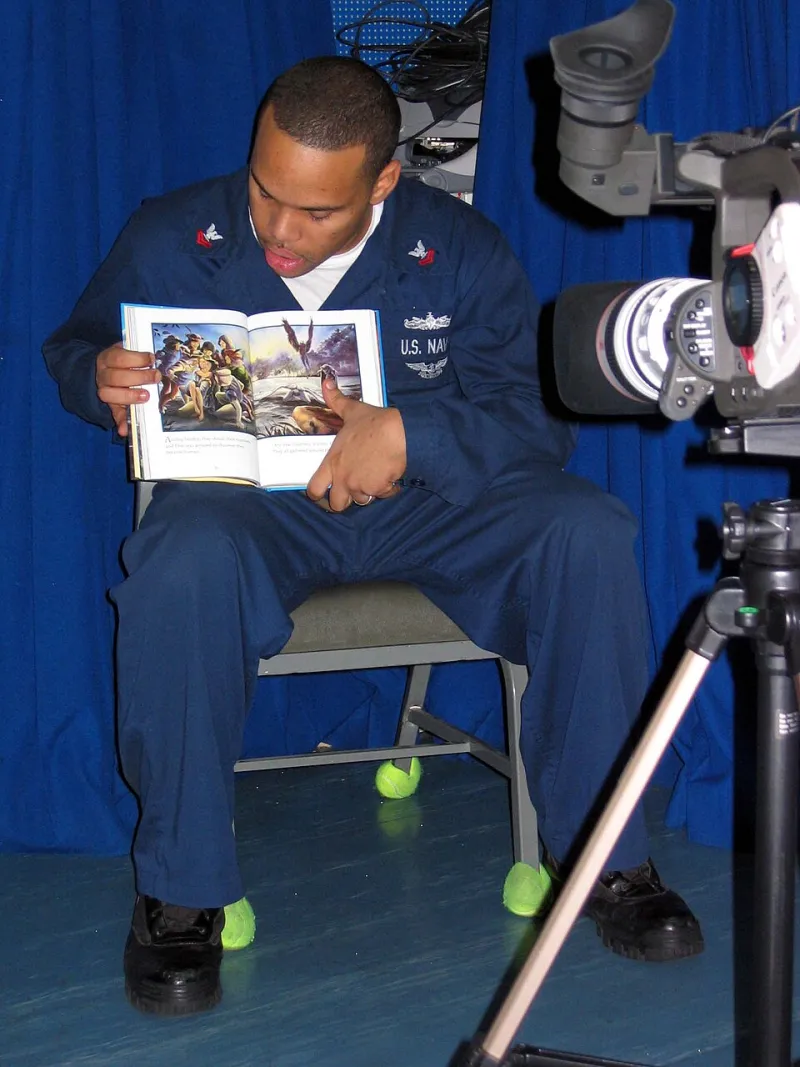
Photo: U.S. Navy photo by Journalist 1st Class James E. Coyle, Public domain, via Wikimedia Commons
A few months ago I stopped reading to the end. Not out of laziness, and not as a lesson in anything. My daughter was six, we were three chapters into a book about a fox who had lost his way, and it was 7:40pm. So I closed the book at a fork in a path and said goodnight.
What happened next surprised me. She didn't complain. She lay there and said, "But he'd take the left one, wouldn't he, because of the berries."
And then she went to sleep. Not instantly — she never does — but without the usual haggling.
I have been thinking about that evening ever since, because I think we have a habit, in this country of ours, of tidying up stories before we hand them over. And I am not sure it always helps.
The pull of the tidy ending
I understand the instinct. Bedtime is the one bit of the day when we are contractually obliged to deliver calm. A story that ends with everyone safe, warm and accounted for does something real for a child's nervous system, and I would not give that up.
There is also the practical matter of our evening — the bit after they're down, which is short and precious and rapidly shrinking.
But a tidy ending is not the same thing as a good one. And somewhere along the way, a lot of us started believing that the last line of a bedtime story should tie a bow on the evening, close the curtain and switch off the imagination. That the child should be satisfied, settled and finished.
Children are rarely finished. That's rather the point of them.
What an open ending actually does
The word cliffhanger has a slightly cruel ring to it, which is a shame, because it describes something old and generous. Long before television worked out that people will come back next week to find out what happened, stories were told in instalments — around fires, in serialised novels, in a thousand and one nights. The pause was never a trick. It was an invitation.
For a young child, an unfinished story does three small things at once:
It hands over the pen. A story that isn't closed leaves room for a child's own version of events. They are no longer receiving a narrative; they are weighing one up.
It builds the muscle of holding two possibilities. Guessing what comes next, and being wrong, and adjusting — this is the raw material of all storytelling, and it is surprisingly good practice for the rest of life too.
It makes tomorrow a place with something in it. Children with something to look forward to settle differently. Not always faster. Differently.
That last one is the bit that changed bedtime in our house. The next night's story stopped being a routine and became a reunion. "Where were we?" is a far better opening line than "Once upon a time".
Where the line is: suspense versus worry
Here is the important distinction, and it is the whole article, really.
A cliffhanger should leave a decision unresolved. It should not leave a danger unresolved.
Leaving a fox at a fork in the path, wondering which way to go, is suspense. Leaving a fox in a trap, alone, with wolves approaching, is worry — and worry at bedtime is a debt you will pay for at 2am. The child's body doesn't know the difference between a story and a threat. The character must be safe, warm and accompanied when you close the book. Only the next step should be in doubt.
If your child asks you to leave the landing light on by a different name, you have gone too far.
Five ways to leave a story open without leaving a child unsettled
Stop at a choice, not a crisis. "She stood at the gate with the key in her hand" — good. "She heard a noise behind her and turned" — not good.
Ask a question instead of posing a threat. "What would you pack, if it were you?" gives a child somewhere to put their imagination. "What do you think is in the cellar?" does not.
Land the mood, not the plot. Close the book while things are calm, even if the problem is unsolved. The unresolved plot is fine. The unresolved feeling is not.
Use a holding phrase. Pick a short line from the moment you stopped and repeat it the following night before you begin. It signals that the story was kept safe overnight, and it takes four seconds.
Let them finish it sometimes. Every few weeks, don't read the ending — ask for it. Children's endings are frequently better than the printed ones, and always more surprising.
The bookmark method
One practical note, because this is the sort of idea that sounds lovely and dies by Wednesday. Keep a pencil near the bed and write the last line you read on the bookmark. Not a summary. The actual words. "The horse looked at the two roads and waited."
It takes five seconds, and it means the reunion never stalls while two tired adults argue about whether the fox had already met the owl.
A necessary caveat
Not every night needs a cliffhanger. Some nights you want the story to end in a hug and the light to go off and everyone to be asleep by eight. There is no shame in that; it's most nights, honestly.
And some children simply don't want an open door at bedtime. If yours asks for the ending, gives the ending. A tradition that costs a child their sense of safety isn't a tradition worth keeping.
But once in a while — perhaps on a night when everyone is a bit too restless for a tidy finish — try closing the book mid-path. Say goodnight. Let the fox stand there.
You may find, as I did, that the most comforting words in a bedtime story are not the end, but where were we?