Whispering Hills and Little Red Hooves: Bedtime Legends from the British Landscape
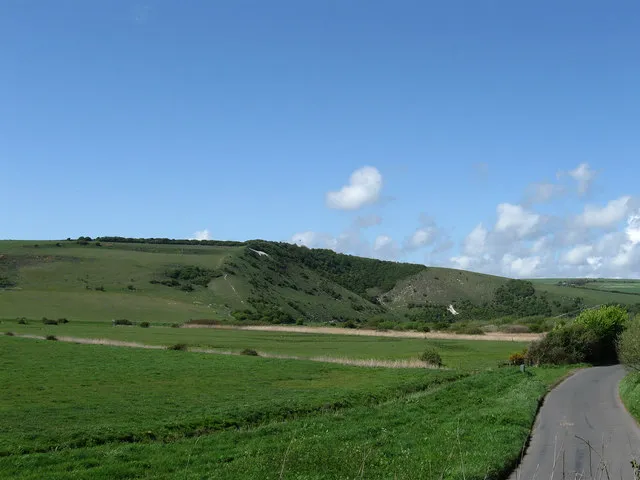
Photo: Simon Carey, CC BY-SA 2.0, via Wikimedia Commons
There is a certain hush that arrives just before a bedtime story. The tea is finished, the curtains are drawn and a small person is deciding whether to wriggle one last time. In that hush, a story about a horse on a hillside can feel as close as the bedroom door. At Little Red Horse, we like tales that are old enough to have moss on them, but gentle enough for the last hour of the day.
Britain is full of these stories. They are tucked into chalk downs, windy moors, old drovers' roads and village ponds. Many of them began as warnings or wonderings, passed from one fireside to another long before anyone thought to write them down. The trick for bedtime is not to lose the wonder. It is simply to turn down the spooky bits, the way you would turn down a lamp.
Why red horses keep appearing in British folk tales
Horses turn up in British folklore in many forms. Some are helpful. Some are mischievous. A few are downright alarming, which is exactly why they need a little bedtime editing. Red horses have a particular charm. They feel lucky, earthy and a bit magical, like a ribbon tied to a gate.
The landscape gives us plenty to work with. The white horse at Uffington in Oxfordshire is one of the most famous chalk figures in the country, and the lost Red Horse of Tysoe in Warwickshire has kept its own hold on local imagination. There are chalk horses at Westbury in Wiltshire and Kilburn in North Yorkshire too, each with its own stories and rumours. You do not need to be a folklorist to enjoy them. You only need a child who likes the idea of a horse so big it can only be seen from the sky.
Six gentle tales to try at bedtime
These are not fixed versions. Treat them as starting points, then change the names, the weather or the ending to suit your listener.
-
The Little Red Horse of the Ridge. A red horse lives on a chalk ridge and keeps an eye on travellers below. One evening a shepherd loses his way in the mist. The horse does not speak. It simply walks ahead, hooves clicking on the chalk, until the shepherd sees his own gate. Bedtime detail: the horse smells of warm hay and rain.
-
The Dragon Under the Hill. Near Uffington there is a hill called Dragon Hill, and old stories say a dragon once lived close by. For bedtime, make the dragon a sleepy guardian who snores under the turf. A child leaves a chalk pebble on the hill and the snoring stops for one peaceful night. Bedtime detail: the ground feels warm under small boots.
-
The Kelpie Who Learned Manners. Water horses appear in Scottish tales, often with a glint in their eye. Soften the story by making your kelpie a glossy black pony who wants his mane combed. The child combs it with a twig, says thank you, and the pony carries her safely to the edge of the loch before breakfast. No one is taken anywhere dark or deep.
-
The Brownie of the Hearth. Brownies are helpful household spirits from northern and Borders folklore. In your version, a small brownie tidies the spoons at night and leaves a warm spot by the stove. The family leaves out a bowl of porridge. The brownie is shy, not scary, and the story ends with everyone asleep.
-
The Pixies' Washing Line. On Dartmoor and in Devon, pixies are often more mischievous than wicked. Tell of tiny folk who borrow a doll's scarf and hang it on a gorse bush. The child leaves a pebble in exchange. In the morning the scarf is back, folded neatly, with a daisy on top.
-
The Worm That Liked Warmth. The Lambton Worm is a famous North East legend, but the full version is too fierce for most bedtimes. Keep the worm, lose the battle. Your worm is a long, lonely creature who likes sitting near the fire. A kind child gives it a warm brick and it curls up small again. The story ends with a garden gate left open and a very sleepy worm.
The softening toolkit
Every parent becomes a story editor. Start by lowering the stakes. A chase can become a game of hide-and-seek. A monster can become a grumpy neighbour. A warning can become a rule of kindness. Name the feelings out loud: the shepherd is worried, the pony is shy, the brownie is nervous. Children like to know that fear has a name and a way out.
Next, add sensory details. Bedtime stories live in the body as much as the ears. Let them hear chalk crunching, rain pattering on a caravan roof, a kettle humming. Let them feel cold moss, a smooth pebble, a ribbon between fingers. Let them smell horse breath, woodsmoke, wet wool. These details make a story feel safe and close, even when it is set on a windy hill hundreds of years ago.
Finally, end at home. A door closes. A lamp is lit. The horse has a full hay net. The child is tucked in. Folk tales often end with a bargain or a warning, but bedtime can end with the sound of a gate latch and the knowledge that everyone is inside.
A chalk horse for the windowsill
After the story, try a small making ritual. You will need black sugar paper, a piece of chalk and perhaps a red ribbon. Draw a simple horse together: a long back, four sturdy legs, a neck like a question mark and a tail like a comma. It does not need to look like Uffington. It only needs to look like it belongs to your child.
If chalk dust is not welcome indoors, take the drawing outside on a dry pavement. If it is raining, use a blackboard or a sheet of dark card. Add a red ribbon for a mane. Give the horse a name and a job: carrying dreams, guarding the shoe rack, reminding everyone to put their wellies away. This is storytelling with the hands, and it often lasts longer than the tale itself.
Invent a legend for your own street
The best folk tales are local. Ask your child what is at the end of your road. Is there a hill, a pond, a bus stop, an old wall, a tree that looks like a bear? Who might live there? What small kindness would they need? What sound would you hear at dusk?
Draw a map together. Mark the hill, the pond, the corner shop and the chalk horse. Add a dotted line for the horse's evening route. Then tell the story of your own place, using the same soft rules: low stakes, clear feelings, sensory detail and a safe ending. You may find that the legend of the school gate pony becomes as beloved as any tale from a book.
Bedtime stories do not have to be grand. They need to be close. A red horse on a chalk ridge, a warm bowl of porridge, a ribbon in the dark: these are small things, but they carry a child gently towards sleep. And in the morning, the hills are still there, waiting for another story.